From Isolated to Connected: How Video Calls Brought My Grandma Back to Life
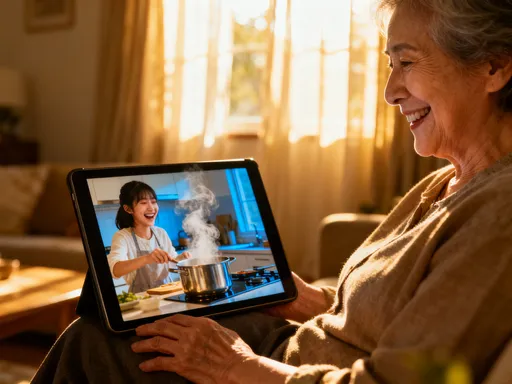
You know that ache when someone you love feels just a phone call away, yet worlds apart? I felt it every time I dialed my grandma’s number, hearing her voice but missing her smile. The silence after "I love you, bye" grew heavier each time. She’d say she was fine, but I could hear the loneliness in her voice—especially after Grandpa passed and her doctor advised against long drives. We called daily, but something was missing. Then one rainy Tuesday, I set up a simple video call on her old tablet. It wasn’t perfect. The screen flickered. She held the device sideways. But when I saw her eyes light up as she watched me stir soup on a Sunday evening, something shifted. For the first time in months, she didn’t just hear me—she saw me. And I saw her. That moment didn’t fix everything, but it started to mend what distance had quietly broken.
The Silence Between Calls
Before video calls, our connection lived in the space between words. I’d call Grandma every evening around 6:30, right after I got home from work. She’d answer with her soft, familiar voice: "Hello, sweetheart." We’d go through the routine—how was traffic, did I eat, was the dog behaving? She’d tell me about her day: the neighbor’s cat came by, she watered the geraniums, she watched an old movie on TV. It was comforting, but thin—like a photograph of a meal instead of the meal itself. I could hear her, but I couldn’t see if she was tired, if her hands were shaking, if she’d forgotten to eat again. And she couldn’t see my life either—just hear about it in fragments.
The loneliness wasn’t just hers. I felt it too. As a working mom juggling dinner, laundry, and bedtime stories, I wanted to care for her, but phone calls started to feel like check-ins, not conversations. It was like trying to hug someone through a wall. I’d hang up and stare at my phone, wondering if she put on a brave voice, if she really was okay. Her world had shrunk—no more church potlucks, no weekly bridge games, no trips to the farmer’s market. Her mobility wasn’t what it used to be, and bad weather or fatigue often kept her home. I wanted to visit more, but with two kids and a full-time job, driving two hours each way wasn’t always possible. We were connected by voice, but emotionally, we were drifting.
What I didn’t realize then was that hearing wasn’t enough. We needed presence. We needed to witness each other’s lives, not just report on them. That missing piece—the shared glance, the spontaneous laugh, the look of pride when I showed her my garden—was eroding our bond. The calls kept us informed, but they weren’t keeping us close. And that distance, subtle as it was, began to weigh on both of us.
The First Awkward Click
I thought getting her on video would be simple. I downloaded what I thought was the most popular app, sent her a link, and called her to walk her through it. "Just tap here, then allow camera access, then—" I started, speaking too fast, assuming she’d follow. But over the phone, I could hear her fumbling. "Which icon is it? The blue one? The white squiggle?" she asked. I tried to describe it, but without seeing her screen, I was guessing. After five minutes, she sighed. "I think I pressed something wrong. It says error." I told her to try again, but her voice tightened. "I don’t want to break this thing. Maybe we should just talk like we always do." And she hung up.
I felt awful. I had approached it like a tech task, not a human one. I’d focused on the app, the steps, the settings—everything except how she felt. I realized then that for someone who grew up with rotary phones and handwritten letters, a tablet isn’t just a tool. It’s a foreign country with its own language and rules. My mistake wasn’t the app—it was the pace, the pressure, the assumption that she should adapt to the technology instead of the other way around.
So I slowed down. I visited her the next weekend, brought her old tablet—the one she used to watch cooking shows—and set it up myself. I chose one video app and stuck with it. I made the icon big, labeled it with a sticky note that said "Call Family," and set the tablet in a stand on her kitchen table. No extra apps, no updates that changed the layout overnight. I showed her one thing: press this button when you see my name come up. That’s it. No menus, no settings, no troubleshooting on the spot. I practiced with her three times that day, each time ending with a smile and a "You did great, Ma." The next week, she answered on her own. It wasn’t perfect—she still held the tablet too close, and the audio echoed a little—but she was there. And I was there. And for the first time, we were together.
Small Screens, Big Moments
The magic didn’t come from high definition or fancy features. It came from the ordinary. The first real breakthrough happened on a Wednesday night. I was making dumplings, just like she used to teach me. I propped the tablet on the counter, turned on the video, and said, "Ma, I need your eyes." She leaned in, adjusted her glasses, and said, "You’re folding them too tight! Loosen your pinch, or they’ll burst." I laughed—she sounded just like she did when I was ten. But this time, I could see her smile, the way her eyes crinkled at the corners. I turned the camera to show her the pot, and she clapped. "Now that’s how you do it!"
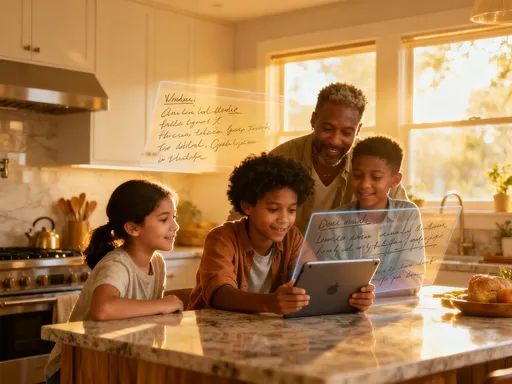
That moment changed everything. It wasn’t a call. It was a visit. She started joining us for dinner most nights, even if just for ten minutes. I’d pan the camera to show the kids doing homework, the dog stealing a sock, the rain tapping on the window. She’d wave at the neighbors when they walked by the door, shout encouragement when my daughter played piano, and even “supervise” my vacuuming with playful critiques. "You missed under the couch!" she’d say, pointing off-screen. These weren’t scheduled check-ins—they were shared moments, stitched into the fabric of daily life.
One evening, I was cooking and forgot to answer. She called back five minutes later. "I just wanted to see if you burned the garlic again," she joked. That’s when it hit me: she wasn’t just receiving visits—she was initiating them. The screen had become a window into our world, and she was peeking through, not as a guest, but as part of the household. The emotional gap that phone calls couldn’t bridge was finally closing, one small, shared moment at a time.
Tech That Fits Her Life, Not the Other Way Around
Success didn’t come from using the latest app or fastest internet. It came from respecting her rhythm. We didn’t switch apps every time a new one promised better quality. We didn’t enable automatic updates that rearranged the screen overnight. We kept it simple, predictable, and consistent. Her tablet stayed in the same place—on the kitchen table, near the window where the light was good. She used the same chair, the same charger, the same routine. Every Sunday at 5 p.m., my face would pop up on her screen. No surprises. No confusion.
I learned to avoid tech jargon like “Wi-Fi,” “bandwidth,” or “sync.” Instead, I said things like, "The internet’s sleepy today," or "Let’s give the tablet a little rest." When the screen froze, I didn’t say, "Restart the app." I said, "Let’s hang up and call back—sometimes it just needs a breather." This wasn’t about dumbing things down. It was about speaking her language, meeting her where she was.
And I never asked her to do more than one thing at a time. If I wanted to show her a photo, I sent it ahead of time. If we were trying something new, like sharing a digital recipe, I walked her through it in person first. The goal wasn’t to make her tech-savvy—it was to make technology invisible. When it works right, you don’t notice the tool. You only notice the connection. That’s what we achieved. The tablet didn’t become a source of stress. It became a trusted companion, like her favorite teacup or her well-worn apron.
When the Family Chain Got Stronger
One screen opened the door for everyone. Once Grandma got comfortable, I invited my sister, my cousins, even her old friend from church. Birthdays became joyful chaos—eight faces on a grid, singing off-key, holding up cupcakes, shouting "Make a wish!" over each other. My nephew blew out candles on his cake while Grandma counted his age on her fingers and laughed. My brother, who lives overseas, started joining weekly. "It’s not the same as being there," he said, "but it’s a whole lot better than a voicemail."
Even Grandpa’s sister, who lives in another state, started dropping in. They hadn’t seen each other in years, but now they chat every few weeks, reminiscing about childhood summers, sharing old photos, teasing each other like they were kids again. The tablet became a bridge not just for our nuclear family, but for the whole extended circle. People who once felt like distant memories are now part of each other’s lives again.
And here’s the beautiful twist: these virtual moments didn’t replace in-person visits. They made them more meaningful. When I finally drove down to see her, she hugged me and said, "You look exactly like you do on the screen." That meant she’d been watching, paying attention, feeling close even when I wasn’t there. And when we did visit, we had more to talk about because we’d already lived so much together, just through that little window. The tech didn’t steal from real life—it fed it.
Troubleshooting Without Tears
Let’s be real—tech glitches happen. The screen freezes. The audio cuts out. The tablet goes to sleep in the middle of a story. In the beginning, these moments felt like failures. I’d panic. She’d apologize. "I must’ve pressed something wrong." But over time, I learned that the real key wasn’t perfect tech—it was patience and a sense of humor.
Now, when the screen freezes, I don’t rush. I say, "Looks like the tablet’s taking a nap. Let’s call back in a minute." If the mic isn’t working, I switch to phone audio and keep talking. I’ve even developed little scripts to keep it light: "It’s not you, Ma—it’s the Wi-Fi being grumpy today." She laughs. And that laugh? It’s worth more than a flawless connection.
I also have backup plans. If the tablet dies, I call her phone and just talk—but I always try to reconnect later. If she’s having a tough day, I don’t push. I say, "We’ll try again tomorrow. No rush." The goal isn’t flawless performance. It’s consistent presence. And sometimes, the moments after a glitch—when we reconnect, when she says, "There you are!"—feel even more precious because we worked for them.
I also made a one-page guide with big print and pictures: "How to Answer a Video Call." It’s taped to the wall beside her tablet. It shows a photo of the screen, circles the green button, and says, "Tap here to see family." Simple. Clear. No stress. And if all else fails, I call her and say, "I’m coming over this weekend. We’ll fix it together." Because sometimes, the best tech support is love with a toolbox.
More Than a Call—A Daily Dose of Belonging
Over time, something remarkable happened. Grandma started looking forward to our calls. Then she started asking about them. "Is tonight our night?" she’d say on Sundays. She began sharing things she used to keep to herself—her worries about the garden, her pride in finishing a crossword, her amusement at the birds fighting over her feeder. She even started dressing up a little—putting on her favorite scarf, brushing her hair—before our calls. It wasn’t vanity. It was dignity. She felt seen. And feeling seen changed her.
Her doctor noticed it too. At her last check-up, he said she seemed more alert, more engaged. "Social connection is brain exercise," he told me. And he’s right. Those daily moments weren’t just emotional—they were cognitive. She was remembering names, following conversations, reacting in real time. Her anxiety eased. She slept better. She laughed more. Not because of artificial intelligence or advanced algorithms, but because she was part of a rhythm again. She wasn’t on the sidelines. She was in the game.
For me, the gift was just as deep. I stopped worrying so much. Seeing her in real time—her posture, her energy, her smile—gave me peace. I could tell when she was truly tired, when she needed a delivery, when she just needed to talk. And my kids? They know her voice, her jokes, her way of humming old songs. They don’t just hear about her. They know her. That’s the kind of inheritance no will can provide.
A Window That Heals
Looking back, it wasn’t about upgrading from voice to video. It was about restoring presence. That little screen didn’t replace hugs or Sunday dinners. But it kept the thread alive when distance threatened to snap it. It turned isolation into inclusion, silence into shared laughter, and worry into reassurance. Technology, at its best, doesn’t shout about its features. It whispers, "You’re not alone."
It didn’t take a miracle. Just a tablet, a steady internet connection, and the decision to try—gently, patiently, with love. We didn’t change the technology. We changed how we used it. We made it serve us, not the other way around. And in doing so, we gave Grandma something priceless: a place in our daily lives. Not as a memory, not as a voice on the phone, but as a living, breathing part of our story.
So if you’re sitting there, staring at your phone, wondering how to stay close to someone who feels far away, I’ll tell you this: start small. Pick one app. Set up one device. Press one button. Let the first call be messy. Let the second be better. And soon, you’ll find that you’re not just calling someone—you’re with them. Because sometimes, the most powerful technology isn’t the one that dazzles. It’s the one that lets you see the people you love, right when you need them most. And that? That’s not just connection. That’s home.