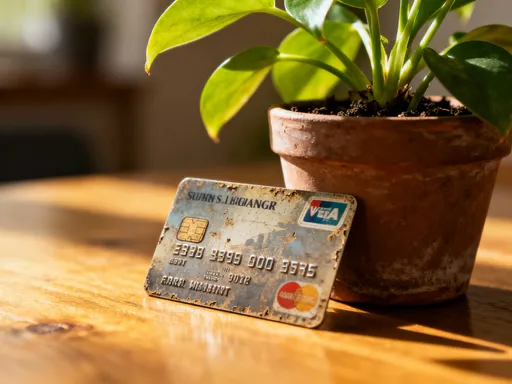
How I Protect My Money When Disaster Hits — A Real Diversification Strategy
Natural disasters don’t just destroy homes—they can wipe out savings too. I learned this the hard way after a storm disrupted markets and froze access to cash. That’s when I realized: your money needs more than one safe spot. What if the bank is down, the power’s out, or roads are closed? I started rebuilding my financial plan around true asset diversification—not just stocks and bonds, but real, usable options that work when everything else fails. This is how I did it. It wasn’t about chasing higher returns or timing the market. It was about ensuring that no matter what happened—whether a hurricane, wildfire, or regional power outage—my family would still have access to resources that hold value and can be used when traditional systems are offline. Financial security, I discovered, isn’t measured in portfolio size alone, but in resilience.
The Wake-Up Call: When Nature Hits and Your Portfolio Shakes
The storm hit without full warning. Within hours, wind speeds exceeded 100 miles per hour, knocking out power across the county. Trees fell on power lines, cell towers went silent, and roads became impassable. For three days, our neighborhood was isolated. Emergency crews focused on rescue and safety, not ATM access or Wi-Fi restoration. During that time, I realized something unsettling: my financial life was suddenly inaccessible. My bank’s online services were down. My credit cards, though technically valid, couldn’t be processed because point-of-sale systems required internet. Even my brokerage account—filled with diversified ETFs and dividend-paying stocks—was useless in that moment. The value was still there on paper, but liquidity had vanished. I couldn’t trade, withdraw, or even verify balances. It wasn’t until a week later, when limited services resumed, that I could begin to assess the damage—not just to my property, but to my sense of financial control.
This experience exposed a flaw in conventional financial planning. Most advice focuses on long-term growth: invest early, stay diversified, ride out volatility. But what happens when volatility isn’t just market-driven, but system-wide? When the infrastructure that enables transactions—banks, networks, transportation—shuts down? I realized that diversification, as commonly taught, often ignores the physical dimension of access. Owning stocks in multiple sectors doesn’t help if you can’t log in to sell them. Having a retirement account with steady returns means little if you can’t withdraw cash to buy food or fuel during an emergency. The illusion of liquidity becomes dangerous when systems fail. My portfolio hadn’t collapsed, but it had become functionally irrelevant at the moment I needed flexibility the most.
The aftermath brought another shock: market volatility. In the days following the storm, regional utility and insurance stocks dropped sharply. My otherwise balanced portfolio saw a temporary but significant dip. While long-term investors are told to ignore short-term swings, the reality for families in crisis is different. When you’re dealing with home repairs, temporary relocation, or lost income, the timing of a market drop matters deeply. I couldn’t afford to wait five years for recovery. I needed accessible funds now. This dual challenge—loss of access and loss of value—forced me to rethink what true financial resilience means. It’s not just about what your money earns, but what it can do for you when normal conditions no longer exist.
What Asset Diversification Really Means in a Crisis
Most people understand diversification as spreading investments across asset classes—stocks, bonds, real estate, maybe some commodities. The goal is to reduce risk by avoiding overexposure to any single market. That approach works well under normal economic conditions. But in a crisis, especially one involving physical disruption, the rules change. True diversification in an emergency isn’t just about financial variety; it’s about functional variety. It means having assets that remain accessible, stable, and usable even when digital networks fail, institutions close, or transportation is disrupted. This requires thinking beyond returns and focusing on utility—what can this asset do for me when systems are down?
Consider the difference between a stock portfolio and physical cash. On paper, stocks may have higher long-term growth potential. But during a blackout, cash can buy water, batteries, or fuel. It doesn’t require a password, a signal, or a functioning server. Similarly, a government bond may be considered safe, but if banks are closed for days, you can’t convert it into usable funds. In that sense, safety and accessibility are not the same. A truly diversified emergency strategy includes assets that serve different roles: some for immediate spending, some for short-term trade, and others for long-term preservation. Each must be evaluated not just for value, but for usability under stress.
Another key factor is geographic and institutional variety. Keeping all your money in one bank, one city, or one financial system creates a single point of failure. If a regional disaster affects that institution directly—through damaged branches, overwhelmed staff, or frozen systems—your entire financial access could be compromised. True diversification includes spreading assets across different locations and types of institutions. This might mean holding funds in a credit union in another state, using a digital wallet with global access, or storing physical assets in a secure location away from your home. The idea isn’t to abandon traditional investing, but to supplement it with options that remain functional when standard channels fail.
Finally, crisis diversification must account for inflation and supply shocks. Natural disasters often disrupt supply chains, leading to sudden price increases for essentials like food, water, and fuel. In such moments, assets that maintain purchasing power become critical. Fixed-income investments may lose value in real terms if prices spike. Cash, while accessible, can erode quickly in high-inflation environments. That’s why including assets like precious metals or stablecoins—when properly understood and stored—can provide a hedge against currency devaluation. The goal isn’t speculation, but stability. Diversification in a crisis isn’t about maximizing gains; it’s about minimizing helplessness.
Splitting Your Safety Net: The 3-Layer Emergency Asset Model
Based on my experience, I developed a three-layer model for emergency asset allocation. This isn’t a replacement for long-term investing, but a complement—a financial safety net designed to function when normal systems are compromised. Each layer serves a specific purpose and becomes relevant at different stages of a crisis. Together, they create a structure that balances immediate access, short-term resilience, and long-term stability.
The first layer is immediate-access assets. This includes physical cash in small denominations, prepaid debit cards with preloaded funds, and local gift cards from essential retailers like grocery stores or pharmacies. The purpose is simple: to cover urgent needs in the first 72 hours when digital transactions may be impossible. I keep a waterproof, fire-resistant container at home with enough cash to cover a week of basic expenses—food, water, medicine, fuel. The amount is modest, but sufficient to maintain dignity and autonomy during the initial chaos. Prepaid cards add flexibility; they can be used at most merchants and are less conspicuous than large amounts of cash. The key is to treat this layer as strictly functional, not as savings. It’s meant to be spent when necessary, then replenished when normalcy returns.
The second layer consists of short-term resilient holdings. These are assets that retain value and can be exchanged when traditional currency is unstable or distrusted. This includes small amounts of precious metals like silver coins, which have intrinsic value and are widely recognized. I also include stablecoins—digital currencies pegged to the U.S. dollar—stored in offline wallets. While not legal tender, stablecoins can be transferred peer-to-peer using mobile apps that work on mesh networks, even without internet. Additionally, I keep a supply of practical barter items: water filters, hand-crank radios, solar chargers, and non-perishable medical supplies. These aren’t for profit-making, but for mutual aid. In a prolonged outage, people trade based on need, not price tags. Having useful items can be more valuable than cash.
The third layer is long-term protected investments. This is where traditional diversification still plays a role, but with adjustments for resilience. I maintain accounts with financial institutions outside my region—credit unions in neighboring states, online banks with strong disaster recovery protocols. These accounts hold a portion of my emergency fund and are accessible remotely. I also invest in low-cost, globally diversified ETFs that are less vulnerable to regional shocks. Importantly, I ensure that account recovery information—such as security questions, two-factor authentication methods, and emergency contacts—is documented and stored in multiple secure locations, including a physical copy kept with a trusted family member. This layer isn’t for quick access, but for recovery and rebuilding after the crisis passes.
Why Geography Matters in Your Financial Backup Plan
One of the most overlooked risks in personal finance is geographic concentration. Many people keep all their banking relationships, investments, and physical assets in the same city or state. This creates a hidden vulnerability: if a disaster affects that region directly, multiple points of access can fail at once. I learned this when my local bank’s main processing center was flooded. Even customers who had online access found transactions delayed or denied. ATMs ran out of cash and couldn’t be restocked due to road closures. For several days, the entire branch network was offline.
Geographic diversification means intentionally spreading financial access across different locations. This doesn’t require moving all your money, but ensuring that a portion is available outside the immediate risk zone. For example, I opened a savings account with a credit union in another state—one known for strong member support and digital resilience. I don’t keep large sums there, but enough to cover critical expenses if my local access is cut off. I also use an online bank with a national charter and redundant data centers. These institutions are less likely to be affected by a single regional event. The key is to test access regularly, not just assume it will work when needed.
Digital geography matters too. Cloud-based financial tools, when properly secured, offer access from anywhere with an internet connection. I store encrypted copies of important documents—bank statements, insurance policies, ID scans—in a password-protected cloud service. I also maintain a portable hard drive with the same information, stored in a safe deposit box two hours away. This ensures that even if my home is damaged, I can still prove ownership and access accounts from another location. The lesson is simple: don’t let your financial life be tied to a single ZIP code. A storm, wildfire, or flood can isolate an entire region. Your backup plan should assume that possibility and prepare accordingly.
Turning Physical Assets Into Financial Lifelines
When digital systems fail, physical assets gain new importance. A $20 bill is still $20, but a working generator, a full tank of gas, or a case of bottled water can become more valuable in a crisis. This isn’t about hoarding or profiteering; it’s about having resources that can meet real needs when supply chains break. I’ve learned to view certain physical items not just as supplies, but as part of my financial resilience strategy.
Precious metals are one example. I keep a small amount of silver coins—not as a speculative investment, but as a durable store of value. Unlike paper currency, they don’t rely on institutional trust. They can be divided, traded, or held indefinitely without decay. I store them in a secure, fireproof container, along with a simple guide to current melt value, so I can assess fair exchange rates if needed. The goal isn’t to become a dealer, but to have an option when other forms of money are unstable.
Other physical assets serve practical roles. I keep a supply of propane, stored safely and rotated regularly. In a power outage, it can run a stove, heater, or generator. That capability has tangible value. Similarly, tools like manual water pumps, solar lanterns, or hand-crank radios can be shared or traded within a community. I don’t assign rigid prices to these items, but I understand their utility. In a crisis, people help each other based on mutual need. Having something useful to offer builds trust and strengthens networks. That social capital is a quiet but powerful part of financial resilience.
Storage and safety are critical. Physical assets must be protected from damage, theft, and decay. I avoid keeping large quantities in one place. Instead, I distribute small reserves across multiple secure locations—my home, a relative’s house, a rented safe deposit box. I also review and rotate supplies regularly to ensure they remain functional. This approach isn’t about fear; it’s about responsibility. Just as we maintain smoke detectors and first aid kits, we should maintain financial backups that work when the grid doesn’t.
Digital Tools That Still Work When the Grid Flickers
Not all digital solutions fail in a disaster. Some are designed for resilience. The key is preparation. I use offline cryptocurrency wallets to store a small amount of stablecoins—digital assets pegged to the U.S. dollar. These wallets don’t require internet to hold value, and transactions can be sent via SMS or mesh networks when cellular data is down. I’ve tested this with a trusted contact using a decentralized messaging app. It worked even when the main network was out. This isn’t a replacement for cash, but an additional option for peer-to-peer transfers when banks are closed.
I also rely on encrypted USB drives to store financial records. These include account numbers, passwords (in a secure manager), insurance policies, and emergency contacts. I keep multiple copies, updated quarterly, and store them in different locations. One is with a family member out of state, another in a fireproof safe, and a third in the trunk of my car—sealed in a waterproof case. This ensures that even if my home is inaccessible, I can still access critical information. I use open-source encryption tools that don’t require cloud access, so I can unlock the data on any computer.
Mobile apps with offline functionality are also part of my plan. Some budgeting and financial tracking apps allow you to view account balances and transaction history without live syncing. I use one that exports data to a PDF, which I store on my phone and tablet. This gives me a recent financial snapshot even if I can’t connect to the internet. I also keep printed copies of key documents, laminated for durability. These may seem low-tech, but in a prolonged outage, paper can be more reliable than pixels.
The principle is simple: digital tools are powerful, but they must be designed for failure. I don’t rely on any single app, device, or network. Instead, I build redundancy—multiple ways to access the same information or value. I test these tools annually, simulating a blackout scenario. This practice has revealed gaps I didn’t expect, like a forgotten password or a dead backup battery. By fixing them in advance, I gain confidence that my plan will hold when tested by real events.
Stress-Testing Your Plan: What Most People Forget
A plan is only as good as its weakest link—and most people never test theirs. I did. After building my three-layer model, I ran a simulation: no power, no internet, no access to my bank for seven days. Could I still manage basic expenses? Could my family access emergency funds? Could I prove ownership of accounts if needed? The exercise revealed several flaws. I couldn’t remember the backup code for my encrypted drive. My prepaid card had expired. The stablecoin wallet hadn’t been updated in months. These weren’t major issues, but they would have been critical in a real crisis.
Stress-testing isn’t about creating fear; it’s about building confidence. I now review my emergency plan every six months. I check expiration dates on cards, verify account access, and update stored documents. I involve my spouse in the process, ensuring they know where backups are and how to use them. We’ve practiced retrieving the safe container, accessing the cloud storage, and using the offline wallet. This isn’t just my plan—it’s our family’s continuity strategy.
I also consider income disruption. What if my job pauses during a disaster? I’ve calculated a minimum monthly need for essentials and ensured that my emergency fund—spread across layers and locations—can cover three months of that amount. I’ve also identified freelance or remote work options that could generate income even if local operations halt. This income buffer isn’t guaranteed, but it’s part of the overall resilience picture.
Finally, I review physical access points. Are the storage locations still secure? Are family members still willing and able to assist? Has a new road closure or construction affected access to the safe deposit box? These details matter. A perfect plan fails if one step is unreachable. By testing and adjusting regularly, I ensure that my financial resilience isn’t theoretical—it’s practical, proven, and ready.
Building Calm Into Your Financial Future
True financial security isn’t about high returns—it’s about staying steady when everything else shakes. By rethinking diversification beyond markets and embracing layered, location-smart, and practical assets, you create a buffer that works when you need it most. This isn’t fear-driven hoarding; it’s thoughtful, responsible planning. When the next storm hits, your money won’t just survive—it’ll hold its ground. The peace of mind that comes from knowing you’re prepared is worth more than any portfolio gain. You’re not just protecting dollars; you’re protecting your family’s dignity, autonomy, and well-being. And that, in the end, is the most valuable return of all.